You define the scientific methods. Lévin™ Harness connects models, tools, data, and compute so agents can design, analyze, validate, and iterate in real projects.
From molecular structures to repeatable research workflows, Lévin™ Harness keeps the work connected in one place.
Molecular context, built in
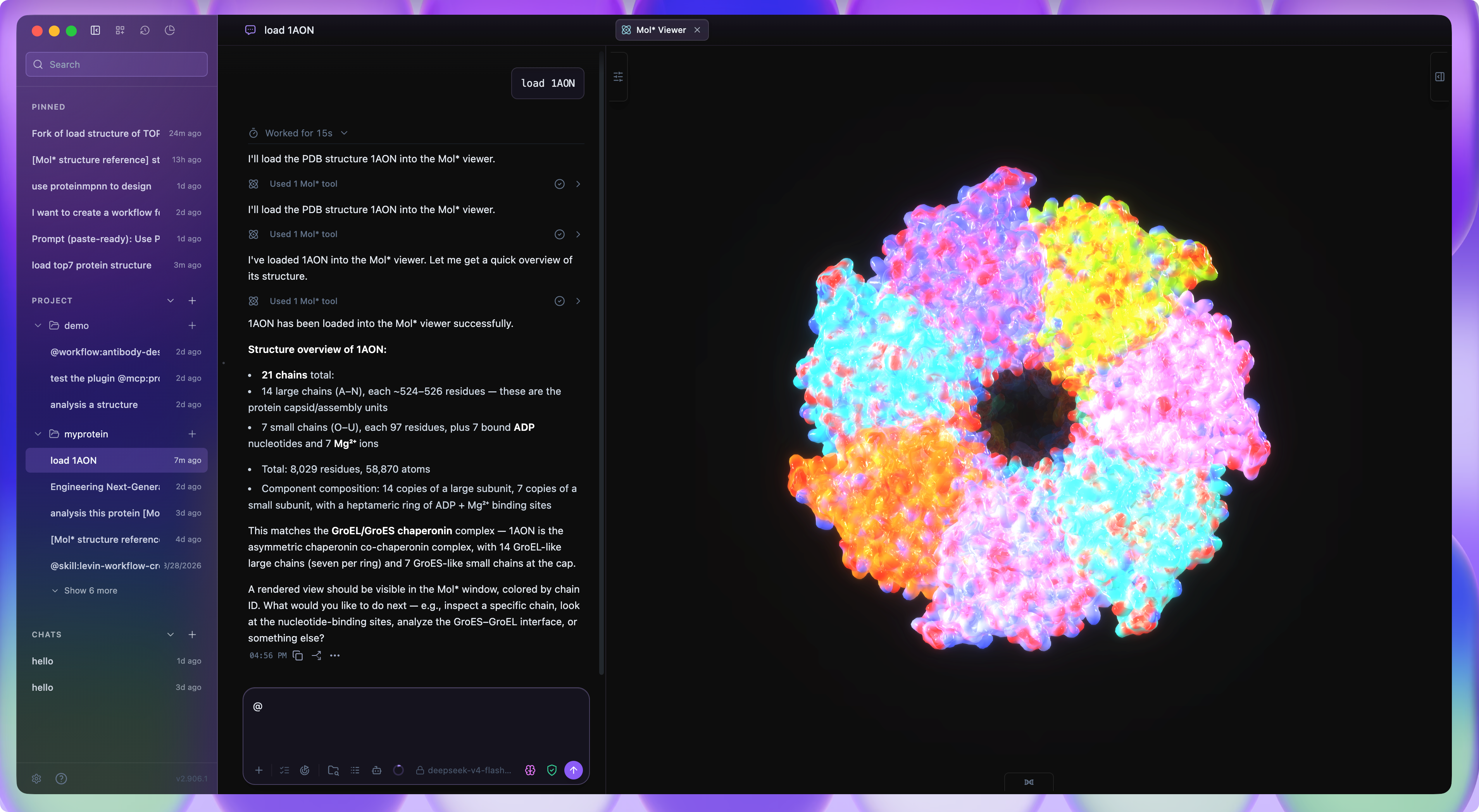
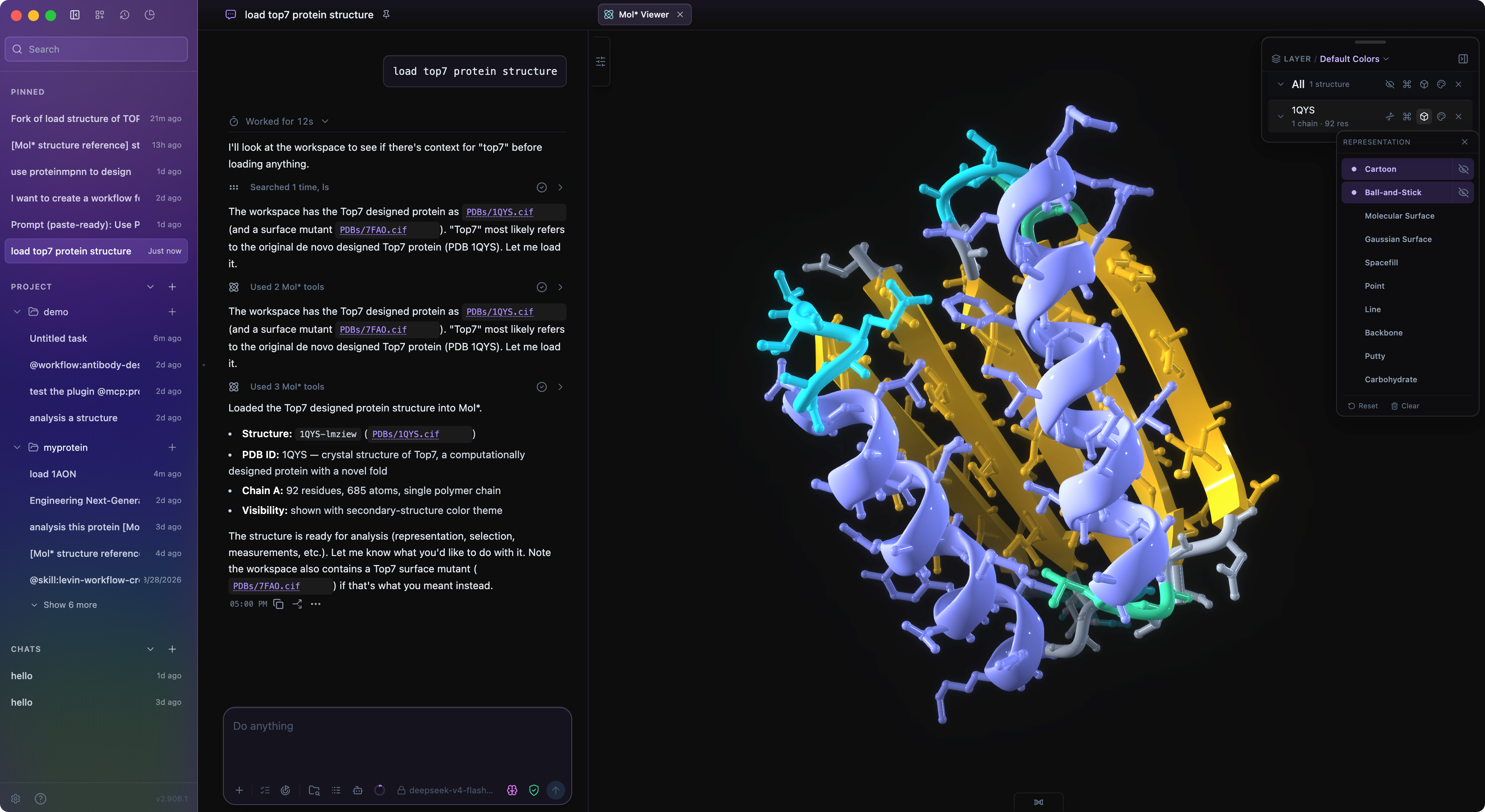
Mol* stays in the Agent's working context, so structure, analysis, and conversation stay together. As the Agent reads papers, runs models, or edits sequences, it can load and inspect the 3D structure without leaving the task. Layers, chains, and sequence context stay together in one workspace. When the Agent refers to a residue or mutation, you see the same molecule it sees.
Open-source tools, ready to use
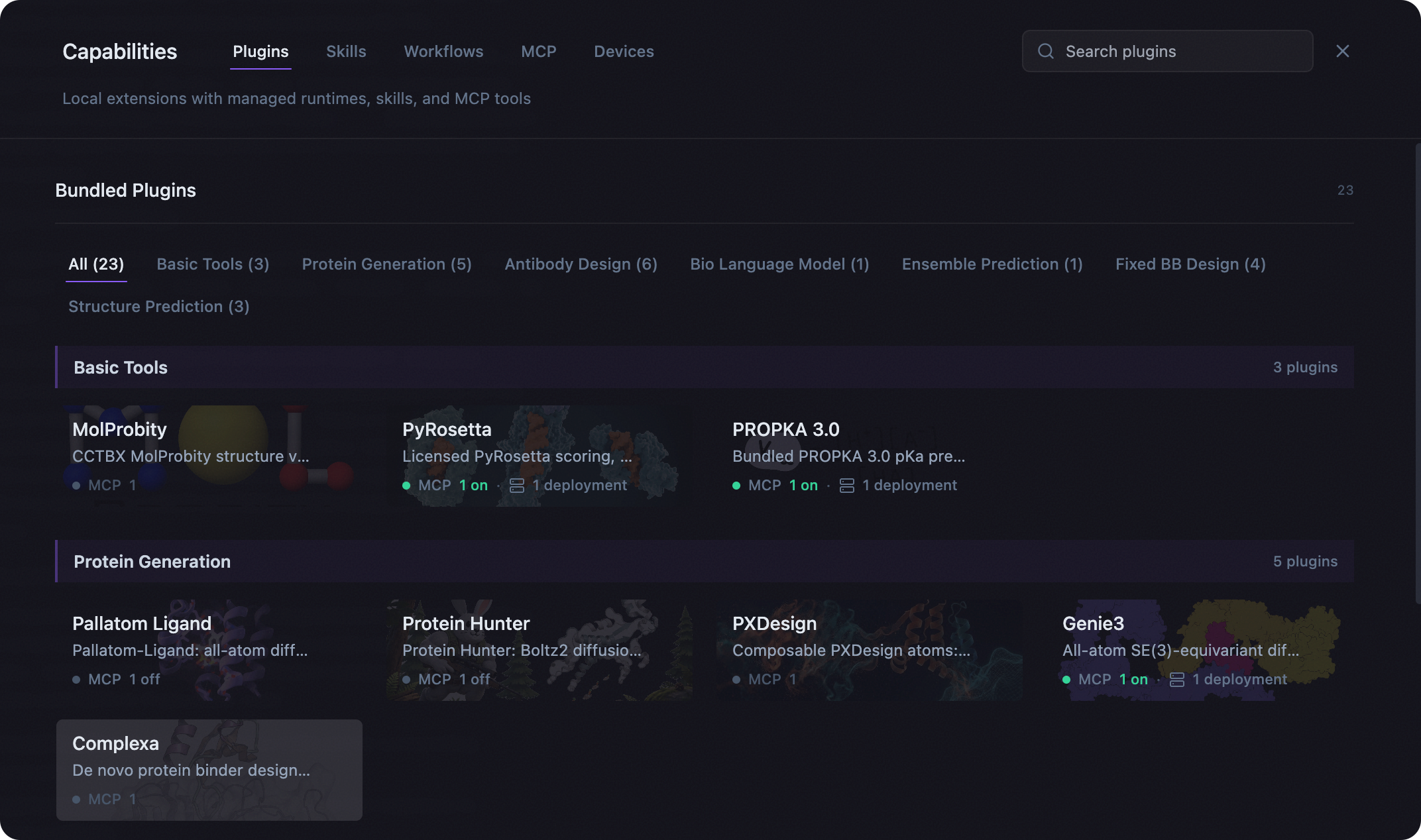
Choose ProteinMPNN, FAMPNN, ThermoMPNN, RFantibody, and more. Levin turns that choice into a protein-design workflow the Agent can run. Each model comes with a managed runtime and weights. Install it on this Mac or a remote SSH GPU host, then call it from Chat or a Workflow. Models that are not yet in the catalog can be connected through the Python Plugin SDK.
Workflows for repeatable research
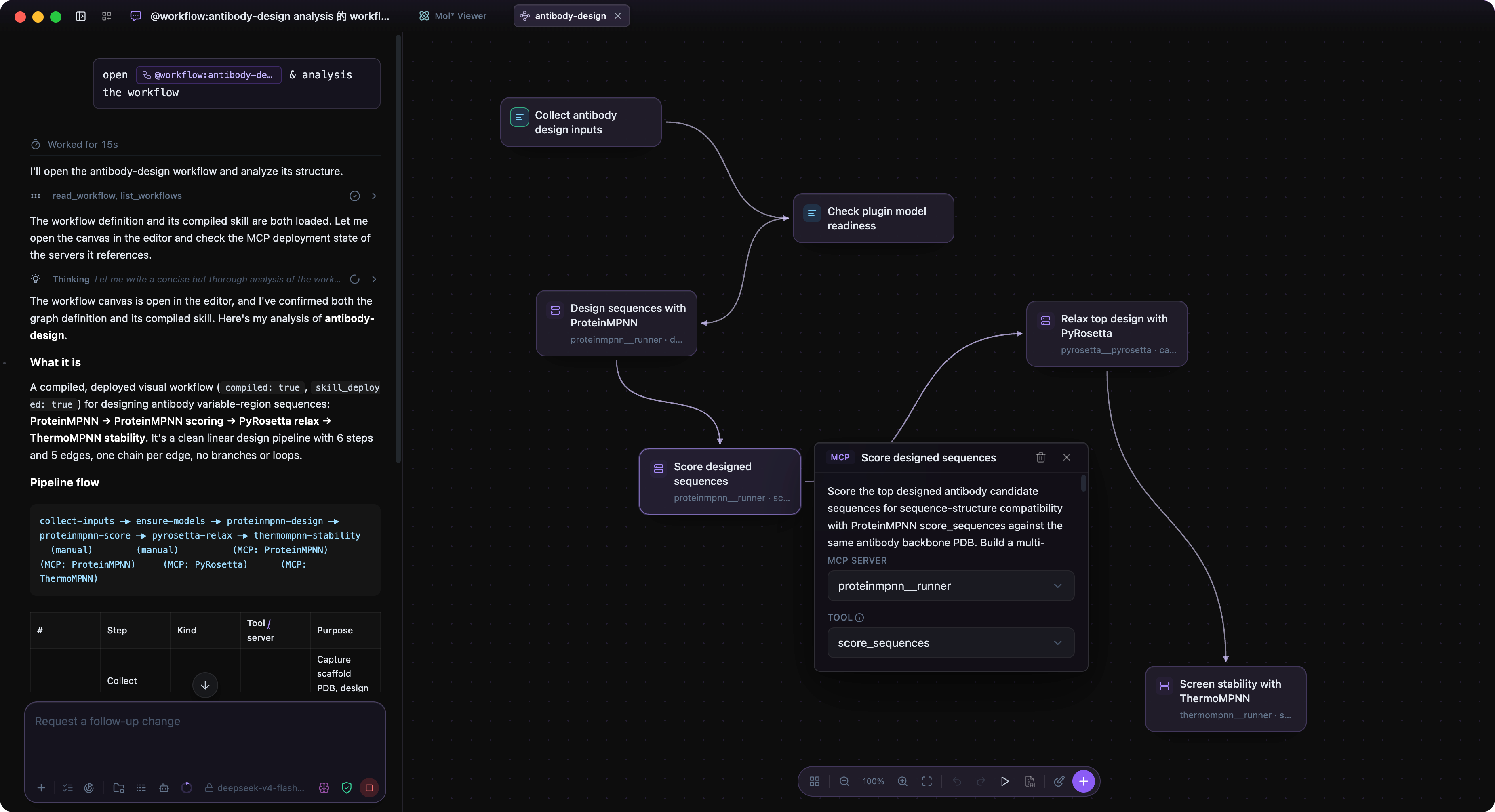
Use the Workflow panel to turn a research method into a repeatable process. You define the goal, refine the steps, and make the domain decisions. The Agent fills in the implementation, generates and runs tests, and checks each change with sample inputs. You and the Agent work on the same canvas, iterating until the Workflow is stable, reusable, and ready to deploy.
Remote devices: local data, remote compute
Data and compute stay separate by design. Connect your own Linux GPU server over SSH and Lévin™ Harness deploys a managed runtime there. Plugins and Agent tasks run remotely, while your local files, models, and results stay on your workstation. Heavy computation goes to the GPU; your local data stays where it is.
Model providers: choose per task
Run open models from DeepSeek, Kimi, GLM, Qwen, Xiaomi MiMo, and more through local, private, or self-hosted endpoints. Choose the model that fits the task. Your workspace and Workflows stay unchanged.
FAQ
Here are answers to the questions we hear most often. For anything else, join our community or reach out to the team.
What is Lévin™ Harness?
Lévin™ Harness is a desktop environment for drug development, built around AI Agents. It works directly with your local files and keeps every research project organized in one place. The Agent plans and completes long, multi-step tasks with minimal supervision—reading, analyzing, writing, and running code—so each result fits the way your team works.
Which platforms does Lévin™ Harness support?
Lévin™ Harness currently runs on macOS with Apple silicon. Support for more platforms is planned.
What can Lévin™ Harness do for me?
It handles the repetitive work between an idea and a result: finding and reading local files, drafting and editing documents, analyzing molecular structures, transforming data, and running multi-step jobs end to end. Run several tasks in parallel, hand off long-running Goals that keep moving while you are away, and get a notification when the Agent needs your decision. When a process becomes repeatable, capture it as a Workflow or Skill and run it whenever you need it, locally or on a remote Linux GPU host.
What powers Lévin™ Harness?
Bring your own model. Lévin™ Harness connects to leading large language models and custom providers. Configure the endpoint, API key, and model; keys stay on your machine. On top of the model, the built-in harness adds Skills, Plugins, Remote Devices, and MCP (Model Context Protocol) integrations.
Do I need to pay to use Lévin™ Harness?
Lévin™ Harness is currently in preview and free for non-commercial use. AI models used within Lévin™ Harness are billed separately by their providers and are not included with Lévin™ Harness.
Where is my data stored?
Your projects, conversations, settings, and API keys stay on your machine by default. When you send a task, content goes only to the model provider you configure, and an optional iCloud backup keeps a copy that you control. Lévin™ Harness does not use your private conversations or files to train its own models; how a third-party model provider retains or uses submitted data depends on the provider, plan, and settings you choose.